
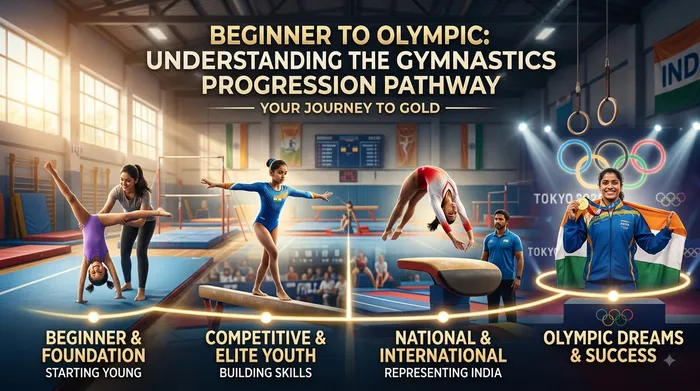
Beginner to Olympic: Understanding the Gymnastics Progression Pathway
Many parents begin gymnastics for their child with simple goals: better coordination, confidence and a healthy outlet for energy. Over time some families start asking about the longer journey. What does the full pathway look like? How do children move from their first class toward higher levels?
This pillar guide explains the complete gymnastics progression hierarchy, from absolute beginner through recreational, pre-competitive, competitive and the rare elite levels that can lead toward international or Olympic aspirations. The structure is presented clearly so parents can see how each stage builds on the one before it.
Core principle: Most children gain lasting benefits from gymnastics without ever competing. The pathway exists to serve those who show interest and readiness. It is not a requirement for every child.
The Gymnastics Progression Hierarchy
Think of the pathway as a clear hierarchy of stages. Each level has its own focus, typical age range, training demands and goals. Children move upward only when they are technically, physically and emotionally ready.
Level 1: Beginner / Recreational Foundations
Position in hierarchy: Entry point for almost every child
Typical age range: 4–8 years (beginners of any age welcome)
Primary goals: Physical literacy, confidence, class routine and enjoyment
Key focus areas:
- Basic body shapes and control
- Forward and backward rolls
- Simple balances and low beam walks
- Introductory strength and flexibility
- Safety rules, listening and turn-taking
- Building confidence through small, visible successes
Classes stay playful. The emphasis is on exploration and positive experience rather than perfection. Most children remain at this level for months or years and still develop excellent coordination, strength and self-belief.
This stage is covered in the core kids gymnastics programme and toddler classes.
Level 2: Intermediate Recreational Development
Position in hierarchy: Builds directly on solid foundations
Typical markers of readiness: Consistent basic skills, ability to follow multi-step instructions, sustained interest
Key focus areas:
- Cartwheel progressions and handstand development
- More challenging beam and bar work
- Stronger conditioning and body awareness
- Simple sequences and linking of skills
- Greater independence in the gym
This level still prioritises enjoyment and all-round development. Many children stay here long-term and never feel the need to move into competitive tracks.
Level 3: Pre-Competitive Preparation
Position in hierarchy: Bridge between recreational training and formal competition
Typical characteristics: Higher training volume (often 2–3 sessions per week), more detailed technical work
Key focus areas:
- Introduction to routines and performance elements
- Greater emphasis on flexibility, strength and precision
- Assessment of readiness for competitive pathways
- Building resilience and focus under slightly higher expectations
Not every child who reaches this stage continues into competition. It serves as a testing ground for interest, physical readiness and enjoyment. Coaches watch closely for signs of genuine motivation versus external pressure.
Details appear on the pre-competitive prep page and the main programmes page.
Level 4: Competitive Gymnastics
Position in hierarchy: Formal competition pathway
Typical demands: Multiple training sessions per week, specialised coaching, competition exposure
Key focus areas:
- Development of full routines on different apparatus
- Strength and conditioning tailored to competitive needs
- Performance under pressure and competition experience
- Clear technical standards and scoring awareness
- Balancing training with school and recovery
Competitive gymnastics develops exceptional discipline and physical capability. It also requires careful management of overall well-being. Open communication between coaches, parents and the child is essential at this level.
See the competitive training programme for how this stage is structured.
Level 5: Elite and High-Performance Pathway
Position in hierarchy: Highest level of the sport
Reality check: Only a very small percentage of gymnasts reach this stage
Key characteristics:
- Daily or near-daily training
- National and international competition exposure
- Specialised support systems
- Long-term periodised planning
- Significant lifestyle commitment from athlete and family
The Olympic gymnast pathway sits at the far end of this hierarchy. It demands exceptional talent, years of deliberate practice and robust support. Most children who begin gymnastics will never (and need never) reach this level. The value of all earlier stages remains intact regardless of how far a child progresses.
How Movement Between Levels Works
Progression is not automatic. Coaches consider a combination of factors before recommending a move upward:
- Technical readiness and quality of basic skills
- Physical preparation (strength, flexibility, injury history)
- Emotional maturity and continued enjoyment
- Consistency of attendance and effort
- Family support and realistic expectations
A child should feel successful and motivated at the current level before taking on greater demands. Rushing the hierarchy increases the risk of frustration, injury or burnout.
Visual Summary of the Hierarchy
| Level | Stage Name | Main Focus | Typical Commitment |
|---|---|---|---|
| 1 | Beginner / Recreational | Foundations, confidence, enjoyment | 1–2 classes per week |
| 2 | Intermediate Recreational | Skill combinations, strength, sequences | 1–2 classes per week |
| 3 | Pre-Competitive | Routines, precision, readiness testing | 2–3 classes per week |
| 4 | Competitive | Full routines, competitions, conditioning | Multiple sessions per week |
| 5 | Elite / High-Performance | National/international pathway | Daily or near-daily training |
Supporting Your Child Through the Hierarchy
Parents play an important role at every level:
- Protect recovery, sleep and school balance
- Celebrate effort and improvement, not only results
- Maintain open dialogue with coaches
- Watch for signs of fatigue, anxiety or loss of enjoyment
- Keep perspective: gymnastics should enhance childhood
- Let the child’s own motivation guide decisions about moving up
When the environment stays supportive, children are more likely to stay in the sport and gain lasting benefits.
The Value of a Complete Pathway Under One Roof
A clear hierarchy works best when an academy offers the full range of stages. This allows smooth transitions, consistent coaching philosophy and proper long-term planning without the child having to change centres repeatedly.
Viswajit Nikhath Gymnastiks in Kundalahalli is structured around progressive, age-appropriate training from first classes through to competitive pathways. Families can review the complete structure on the programmes page, check timings on the schedule page, and find answers to common questions on the FAQ page.
To discuss where your child currently sits in the hierarchy or to arrange a trial, visit the contact page. Background on the coaching approach is available on the about page.
Common Questions About the Pathway
Does every child need to climb the full hierarchy?
No. Recreational training at Levels 1 and 2 delivers excellent physical and personal development for the majority of children.
When should we consider moving up?
Only when the child shows sustained interest, the coaches recommend it, and the family can support any extra commitment without undue stress.
What if my child wants to step back?
That is normal and healthy. Many gymnasts move between levels or take breaks. Skills and confidence already gained remain valuable.
How do we avoid burnout?
Keep communication open, protect recovery time, maintain other interests, and ensure the child’s voice is heard in decisions about training volume.
Conclusion
The gymnastics progression pathway is best understood as a clear hierarchy of stages, each with its own purpose, demands and rewards. From the first playful beginner class to the rarefied air of elite and Olympic aspirations, every level builds on the one before it.
Most children will travel only part of the way, and that is exactly as it should be. What matters most is that each stage is well coached, developmentally appropriate and enjoyable. A transparent hierarchy gives families clarity, reduces confusion and helps children build strength, coordination, resilience and confidence at a pace that suits them.
Whether your child remains in recreational classes or eventually explores competitive training, the foundations laid in the early years create benefits that last far beyond the gym. Start with solid beginner training, stay attentive to your child’s response, and let the pathway unfold naturally with good coaching and realistic expectations.