
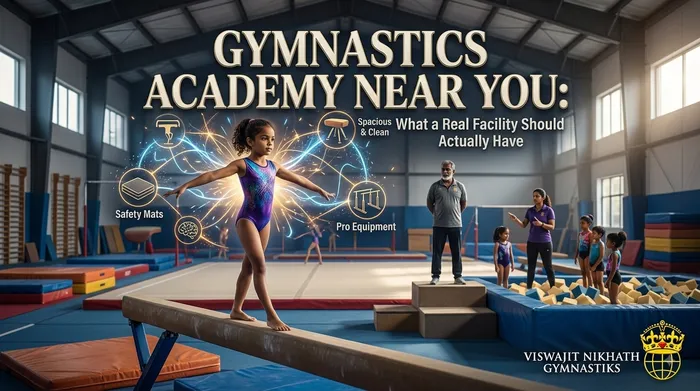
Type "gymnastics academy near me" into Google in Bangalore and you'll get a mix of results: dedicated gymnastics academies, general kids' activity centres that offer gymnastics as one of ten activities, and soft-play gyms that use the word loosely because it sounds active and structured. To a parent scrolling through search results, they can all look fairly similar. On the training floor, they're not similar at all. Here's what actually separates a real gymnastics academy from a general activity space, so you know what to look for on your next visit.
The Apparatus Should Be Purpose-Built, Not Improvised
Gymnastics has a specific, well-defined set of apparatus for a reason: each one develops a different combination of strength, balance, and control. A genuine academy will have a sprung or matted floor area for tumbling, a balance beam (often set low to the ground for beginners), bars for swinging and hanging work, and a vaulting setup appropriate to the age group. If what you're looking at is just open floor mats and a few soft-play shapes, that's a general activity space, not a gymnastics programme, however energetic the class looks.
Safety Matting Isn't Optional, It's the Foundation
Under every piece of apparatus where a child could fall from height, there should be proper crash matting, not a thin yoga mat repurposed for the job. This matters most around the beam and bars, where falls are a normal, expected part of learning a new skill, not a rare accident. When you visit a gymnastics academy near you, look underneath the equipment before you look at anything else. Good matting is a strong sign that safety was considered in the facility's design, not added as an afterthought.
Coaches Should Be Actively Spotting, Not Just Watching
Spotting, physically supporting a child through part of a new skill until they can do it independently, is a specific, trained technique. It's very different from a coach standing nearby and calling out instructions. During a trial or a visit, watch how coaches position themselves when a child attempts something new on the beam or bars. Are hands actually near the child, ready to assist? Is the coach moving with the group, or anchored at one spot? This single detail tells you more about coaching quality than almost anything else you can observe in twenty minutes.
Batches Should Be Structured by Skill Level, Not Just Age
A real academy will typically run separate recreational and pre-competitive tracks, with children moving up as they demonstrate specific skills, not simply because a term has ended. Ask how a child progresses from one batch to the next, and what skills mark that transition. A clear, specific answer ("once they can hold a handstand for five seconds and complete a basic cartwheel", for example) is a good sign. A vague answer ("they move up every few months") suggests progression is more about scheduling than actual readiness.
Hygiene and Floor Discipline Matter More Than They Seem
Because gymnastics involves bare feet, hands, and a lot of floor contact, matting should be visibly clean and floors should be mopped or wiped regularly. Look for a shoes-off policy at the edge of the training area and a general sense of order in how equipment is stored between batches. These are small things, but they reflect the same underlying care that shows up in bigger safety decisions too.
A Short Walk-Through Checklist
On your next visit to any gymnastics academy near you, spend two minutes doing this: look under the apparatus for proper matting, watch a coach spot a child during a skill attempt, ask how batches are split and how progression works, and notice whether the floor and equipment look genuinely maintained. You'll learn more in those two minutes than from any website copy.
Why This Actually Matters
Gymnastics builds real physical skill, strength, and confidence, but only when it's taught on the right equipment, by coaches trained to spot correctly, in batches small enough to get real attention. A facility that looks fun but skips these fundamentals isn't just offering a lesser experience, it's carrying more risk than it needs to for the same activity.
At Viswajit Nikhath Gymnastiks, our floor is set up exactly this way: proper apparatus, matting under every high element, and coaches trained specifically in spotting technique. If you're comparing a gymnastics academy near you against this checklist, we'd genuinely encourage it. Come see our floor for yourself before deciding anywhere.
Frequently Asked Questions
What equipment should a real gymnastics academy have?
At minimum, a dedicated tumbling floor, a balance beam suited to the age group, bars for hanging and swinging work, and a vaulting setup, along with proper crash matting under every apparatus where a child could fall from height.
Is a general play centre or soft-play gym the same as a gymnastics academy?
No. A soft-play or general activity centre may offer gymnastics-style movement as one of several activities, but it typically lacks dedicated apparatus like a beam or bars and doesn't run the structured, skill-based progression a genuine gymnastics academy follows.
How can I check if a coach is properly trained to spot children?
During a trial class, watch whether the coach positions themselves close enough to physically assist a child attempting a new skill, rather than simply observing from a distance. You can also ask directly about a coach's spotting training and experience level.
What safety measures should I look for during my first visit?
Look for crash matting under all elevated apparatus, a reasonable batch size with active supervision, a shoes-off policy on the training floor, and clean, well-maintained equipment. Ask what the academy's process is if a child gets a minor injury during class.
How do I know if my child is ready to move to a higher batch?
A good academy tracks progression by specific skills rather than by time elapsed. Ask your child's coach what skills mark readiness for the next level, and expect a concrete answer rather than a general timeline.