
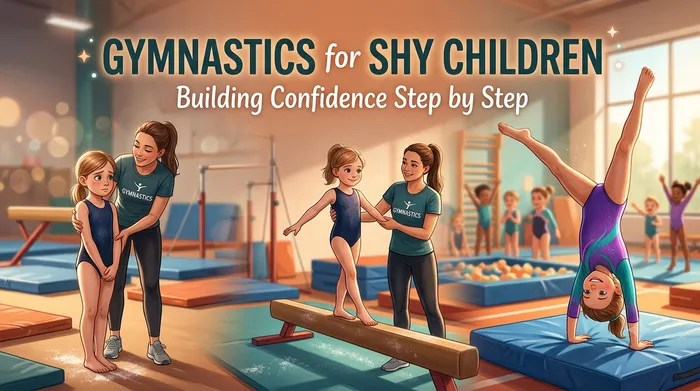
Gymnastics for Shy Children: Building Confidence Step by Step
Shyness is common in childhood. Many children feel hesitant in new groups, avoid the centre of attention, or prefer watching before joining in. Parents often look for confidence building activities for kids that feel supportive rather than overwhelming. Among child confidence sports, gymnastics offers a particularly effective path because progress happens in small, visible steps inside a structured environment.
This article explains how gymnastics for shy child works, why the activity suits reserved personalities, and how parents can support the process at home. The focus remains practical and realistic.
Important: Shyness is not a flaw. It is a temperament. The right activity helps a shy child participate at their own pace while gradually expanding their comfort zone.
Why Some Activities Feel Harder for Shy Children
Certain sports place children in the spotlight quickly. Team games with constant public performance, loud environments, or rapid turn-taking can feel intense for a reserved child. When the setting demands immediate social boldness, some children withdraw further.
Gymnastics creates a different experience. Children work on individual skills within a small group. Attention focuses on personal progress rather than competing against others in every moment. Coaches can give quiet encouragement without drawing the whole class’s focus to one child. This lower-pressure structure often feels safer for shy children.
How Gymnastics Builds Confidence Gradually
Confidence grows through repeated experiences of success. Gymnastics is designed around clear progressions. A child begins with simple shapes, balances and rolls. Each small achievement is noticeable to the child and acknowledged by the coach.
The process typically follows this pattern:
- The child attempts a basic skill in a supported way.
- The coach offers specific, calm feedback.
- The child tries again and notices improvement.
- The success is recognised without excessive fanfare.
- The next slightly harder step becomes available.
Over weeks, these micro-successes accumulate. The child begins to trust that effort leads to results. That trust is the foundation of lasting confidence.
Key Features That Support Shy Children
Several elements of well-run gymnastics classes make the activity suitable for reserved personalities.
Small Group Size
Batches of eight to fourteen students keep the environment manageable. A shy child is less likely to feel lost or overstimulated. Coaches can notice quieter children and offer support without public attention.
Predictable Structure
Classes usually follow a familiar sequence: warm-up, skill stations, strength work and a short closing activity. Knowing what comes next reduces anxiety. Predictability helps shy children settle faster.
Individual Skill Focus
Most of the work centres on personal technique rather than constant team performance. Children can concentrate on their own body and progress. Social interaction happens naturally around shared effort rather than forced spotlight moments.
Patient Coaching Style
Good coaches understand that some children need more time to warm up socially. They offer quiet encouragement, demonstrate skills clearly and allow children to observe before attempting. This respectful approach builds trust.
Step-by-Step Confidence Pathway
Parents can think of the journey in stages.
Stage 1: Observation and Comfort
The child may watch more than participate at first. This is normal. A supportive coach allows it while gently inviting small involvement.
Stage 2: Supported Attempts
The child begins trying skills with close coaching support. Success is defined as effort and small improvement, not perfection.
Stage 3: Growing Independence
The child starts attempting skills with less direct help. They begin to notice their own progress.
Stage 4: Quiet Pride and Participation
The child shows more willingness to join group elements and may even offer encouragement to peers. Confidence becomes visible in posture and willingness to try.
Not every child moves through these stages at the same speed. The important factor is consistent, low-pressure exposure.
Practical Tips for Parents of Shy Children
- Choose a centre that keeps groups small and emphasises positive coaching.
- Attend a trial class and observe how coaches interact with quieter children.
- Avoid pressuring the child to “be brave” or perform for others.
- Ask open questions after class such as “What felt okay today?” rather than “Did you make friends?”
- Maintain regular attendance so the environment becomes familiar.
- Celebrate effort and small steps privately when the child prefers it.
- Communicate with the coach about your child’s temperament so support can be tailored.
Consistency matters more than intensity. A shy child often needs the same calm environment repeated over time before confidence expands.
Comparing Gymnastics with Other Child Confidence Sports
Many activities claim to build confidence. Gymnastics has specific advantages for shy children:
| Aspect | Gymnastics Advantage |
|---|---|
| Social pressure | Lower – focus stays on personal skills |
| Progress visibility | High – clear skill stages |
| Group size control | Usually small batches |
| Noise and stimulation | Moderate and structured |
| Spotlight moments | Limited and optional |
| Adult support | Close coaching available |
Other sports can also help, yet the combination of individual skill work and controlled group setting makes gymnastics particularly suitable for many reserved children.
What Success Looks Like Over Time
Parents of shy children who stick with gymnastics often notice changes such as:
- Greater willingness to enter the training space
- Improved posture and eye contact
- More readiness to attempt new skills
- Occasional spontaneous participation in group activities
- Carry-over confidence in school or social settings
These changes usually appear gradually. The child rarely transforms overnight. Instead, confidence grows in quiet layers.
Finding the Right Environment in Bangalore
The quality of the academy matters greatly for shy children. Look for certified coaches, small batches, clear age grouping and a calm, encouraging atmosphere. Centres that understand different temperaments tend to produce better long-term results.
Viswajit Nikhath Gymnastiks in Kundalahalli offers progressive programmes designed around individual attention and steady skill development. Families can review age-appropriate options on the programmes page and the kids gymnastics page.
Current class timings are available on the schedule page. Practical questions about starting and what to expect appear on the FAQ page. To discuss your child’s needs or arrange a trial, use the contact page. Further information about the coaching approach is on the about page.
When to Seek Additional Support
Most shy children benefit from patient, structured activity. If shyness is accompanied by significant distress, avoidance of almost all social situations, or strong physical symptoms of anxiety, parents may also want to speak with a paediatrician or child specialist. Gymnastics can still form part of a broader support plan.
Conclusion
Gymnastics for shy child works because it builds confidence through small, achievable steps inside a predictable and supportive setting. As one of the stronger confidence building activities for kids, it combines physical mastery with emotional safety. Among child confidence sports, it offers a rare balance of individual progress and gentle group belonging.
Shy children do not need to become outgoing to succeed. They need repeated experiences that prove they are capable. Gymnastics provides those experiences in a form many reserved children can accept and eventually enjoy.
If your child shows signs of hesitation in new groups, consider a trial class in a calm, well-structured academy. With time, patient coaching and consistent attendance, many shy children discover a quiet confidence that grows far beyond the mat.