
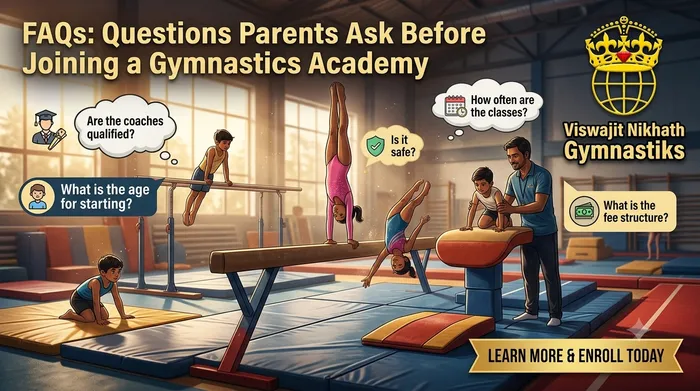
Questions Parents Ask Before Joining a Gymnastics Academy
Starting gymnastics is an exciting step, yet most parents have a list of practical questions before they enrol their child. Clear answers help families choose with confidence and set realistic expectations.
This FAQ-style guide addresses the questions parents ask most often before joining a gymnastics academy. The information is based on common concerns and the structure of well-run programmes in Bangalore.
Tip: Write down your own questions before visiting a centre. A short list makes conversations with coaches more productive.
Age and Starting Point
What is the best age to start gymnastics?
Children can begin as early as age two in toddler classes. Most recreational programmes welcome children from age four upward. Older beginners, including teenagers, can also start successfully in appropriately designed groups. The best age is the one at which the child shows interest and the family can support regular attendance.
Does my child need prior experience?
No. The majority of children start with no gymnastics background. Beginner classes are built around foundations such as basic shapes, rolls, balances and simple strength movements. Coaches expect newcomers and teach from the ground up.
Can shy or hesitant children join?
Yes. Many shy children thrive in gymnastics because the focus stays on personal skills rather than constant public performance. Small groups and patient coaching help reserved children settle at their own pace.
Class Structure and Safety
How big are the classes?
Quality academies keep batches small, typically between 8 and 14 children. Smaller groups allow better supervision, more individual feedback and a calmer environment.
What safety measures should I look for?
Look for adequate matting, progressive teaching methods, age-appropriate equipment and coaches who prioritise body control over advanced skills. A clean, organised training floor and clear rules about movement around the gym are also positive signs.
Are the coaches certified?
Reputable centres employ certified coaches with experience across different age groups. Do not hesitate to ask about coaching qualifications and how long the main instructors have been with the academy.
Schedule, Frequency and Commitment
How many classes per week are ideal?
For most recreational children, one to two classes per week works well. This frequency supports steady progress while leaving time for school, free play and family life. Higher volumes are usually reserved for pre-competitive or competitive pathways.
What if we need to miss classes?
Policies vary. Many centres offer reasonable make-up options or freeze arrangements for genuine reasons such as illness or exams. Ask about the specific attendance and make-up policy before enrolling.
How long is each class?
Beginner and recreational classes for children usually last 45 to 60 minutes. Younger children often have slightly shorter sessions. Advanced or competitive training may run longer.
Clothing and Practical Preparation
What should my child wear?
Fitted, stretchy clothing that stays in place is best. Girls often wear a leotard or a fitted top with bike shorts. Boys typically wear a fitted t-shirt and shorts that are not baggy. Training is almost always barefoot. Long hair should be tied back and all jewellery removed.
Do we need special equipment?
For recreational classes, children usually need only appropriate clothing and a water bottle. The academy provides mats, beams, bars and other equipment.
Fees and Value
How much do classes cost?
Fees vary by centre, age group and frequency. In Bangalore, recreational kids programmes often start around ₹2,500 per month for eight sessions, with adult programmes slightly higher. Competitive training is usually priced separately. Always ask for a clear breakdown of what is included.
Are there registration or additional fees?
Some academies charge a one-time registration fee. Others include everything in the monthly fee. Ask about any extra costs for uniforms, assessments or events so there are no surprises.
Progression and Goals
What if my child wants to compete later?
Good academies offer clear pathways from recreational classes into pre-competitive and competitive training. Movement into these tracks should be based on the child’s interest, readiness and enjoyment rather than pressure.
How will I know if my child is progressing?
Coaches should be able to explain the skill progressions used in class. Many parents notice improved coordination, strength, confidence and willingness to try new movements within the first few months of consistent attendance.
Trial Classes and Next Steps
Can we try a class before joining?
Most reputable centres offer trial classes. A trial is the best way to see how your child responds to the environment, the coaches and the other children. It also gives you a chance to observe coaching style and safety practices firsthand.
What questions should I ask during a visit?
Useful questions include:
- What is the usual batch size for my child’s age?
- How do you handle beginners?
- What does a typical class look like?
- How do you communicate progress to parents?
- What is the make-up class policy?
- Are the coaches certified?
Local Considerations in Bangalore
Location and timetable reliability matter. Centres in areas such as Kundalahalli, Whitefield and the ITPL corridor are convenient for many families. Fully indoor training means classes continue through monsoon and hot weather.
You can explore age-group programmes on the programmes page and the kids gymnastics page. Current timings are listed on the schedule page.
Detailed answers to many practical questions appear on the FAQ page. To arrange a trial class or ask specific questions about your child, use the contact page. Background on the coaching approach is available on the about page.
Quick Reference Table
| Question Category | Key Point |
|---|---|
| Starting age | From 2 years upward; beginners welcome at any age |
| Experience needed | None |
| Ideal frequency | 1–2 classes per week for most recreational kids |
| Batch size | Preferably 8–14 |
| Clothing | Fitted and stretchy; barefoot |
| Trial class | Strongly recommended |
| Main goal | Safety, enjoyment and steady progress |
Conclusion
The questions parents ask before joining a gymnastics academy usually centre on age, safety, class size, schedule, clothing, fees and progression. Clear answers to these points make the decision much easier.
A well-run academy welcomes beginners, keeps groups small, employs patient certified coaches and offers a transparent pathway for growth. The most reliable way to assess any centre is to visit, observe and take a trial class.
When the environment feels safe, the coaching is supportive and your child leaves with positive energy, you have likely found a good match. Take time to ask the questions that matter to your family, and use the answers to choose with confidence.