
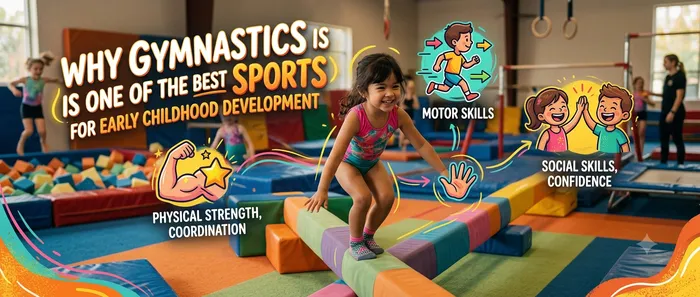
Why Gymnastics Is One of the Best Sports for Early Childhood Development
The early years shape a child’s physical foundation for life. Between the ages of two and eight, children develop balance, coordination, strength and body awareness at a rapid rate. Choosing the right activity during this window can support healthy growth in multiple areas at once. Among available options, gymnastics stands out as one of the strongest choices for early childhood physical development.
This article explains the main preschool gymnastics benefits and why structured gymnastics programmes are particularly well suited to young children. The information is practical and aimed at parents in Bangalore who are exploring activities for toddlers and preschoolers.
Key point: Early movement experiences influence not only physical skills but also confidence, focus and social comfort. Quality matters as much as quantity.
The Unique Demands of Early Childhood
Young children are still building the basic maps of how their bodies work. They need opportunities to:
- Explore different positions and levels (high, low, inverted)
- Practise balance in still and moving situations
- Coordinate arms and legs in new patterns
- Develop strength through natural bodyweight movements
- Receive clear feedback so they can refine their efforts
Free play provides some of these experiences. Structured gymnastics adds progression, safety and expert guidance that free play alone cannot guarantee.
Core Preschool Gymnastics Benefits
Balance and Spatial Awareness
Walking on low beams, holding simple shapes and landing from small jumps teach children to control their centre of gravity. These activities strengthen the systems that support balance and help children understand where their body is in space.
Coordination and Motor Planning
Rolling, crawling variations, basic cartwheel progressions and jumping patterns require children to organise multiple body parts in sequence. Repeated practice improves the brain’s ability to plan and execute movement smoothly.
Strength Through Playful Movement
Gymnastics uses the child’s own bodyweight. Hanging, climbing, supporting weight on hands and jumping build functional strength in the core, shoulders, arms and legs. Because the movements are playful, children develop strength without feeling they are “working out.”
Body Awareness
When coaches ask children to point their toes, squeeze their muscles or reach longer, young children learn to locate and control specific body parts. This growing body awareness supports posture, handwriting readiness and general physical confidence.
Focus and Listening Skills
Even short classes for young children follow a simple routine. Children practise waiting for turns, following two- or three-step instructions and staying with a task for a few minutes. These early attention skills transfer usefully into preschool and school settings.
Confidence Through Small Successes
Young children thrive on visible progress. Mastering a forward roll or holding a balance for a few seconds gives them a concrete sense of achievement. These small wins build the belief that effort leads to improvement.
How Classes Are Designed for Young Children
Quality preschool and early years gymnastics programmes look different from classes for older children. Sessions are shorter, more playful and heavily guided. Coaches use clear demonstrations, simple language and frequent positive feedback. Equipment is scaled to small bodies and safety is prioritised through progressive teaching and soft surfaces.
Groups remain small so every child receives attention. The atmosphere stays encouraging rather than competitive. The goal at this stage is joyful movement and foundational skill building, not performance.
Comparison with Other Early Childhood Activities
Many activities support development. Gymnastics offers a particularly broad combination:
| Developmental Area | Gymnastics Contribution |
|---|---|
| Balance | High – beams, shapes, landings |
| Coordination | High – multi-limb sequences and transitions |
| Strength | High – bodyweight pulling, pushing, supporting |
| Body awareness | High – constant focus on position and control |
| Listening and focus | Strong – short structured tasks |
| Confidence | Strong – frequent achievable milestones |
| Social comfort | Moderate to strong – small group setting |
Other activities such as swimming, dance or free play each contribute valuable elements. Gymnastics is distinctive in how comprehensively it addresses the physical foundations during the early years.
Age Windows and What to Expect
Ages 2–3 (Toddler)
Classes focus on exploration, basic balance, climbing and simple following of instructions. Sessions are playful and highly supported.
Ages 4–6 (Preschool and early primary)
Children can handle slightly longer skill stations and clearer progressions. Gains in coordination and strength often become noticeable to parents.
Ages 6–8
Foundations are refined and more complex patterns are introduced. Children who started earlier usually show strong physical literacy by this stage.
Starting at any point in the early years can still produce meaningful benefits. Consistency over time yields the strongest results.
Practical Advantages for Bangalore Families
Fully indoor training means classes continue through monsoon and hot weather. Reliable schedules help young children settle into a routine. Centres located in residential or mixed areas such as Kundalahalli and Whitefield reduce travel time for parents of small children.
Small batch sizes and age-specific grouping further support the needs of early childhood. Parents can review suitable programmes on the programmes page and the toddler classes page. School-age options appear on the kids gymnastics page.
Current timings are available on the schedule page. Common questions about starting young children are answered on the FAQ page. To arrange a visit or trial, use the contact page. Background on the overall approach is on the about page.
Supporting Development Beyond Class
Parents can reinforce early childhood physical development at home with simple habits:
- Allow safe climbing and balancing on playground equipment
- Encourage rolling, crawling and animal walks during play
- Limit long periods of passive screen time
- Join in short movement games that involve copying shapes or balancing
The combination of structured classes and active free play produces the best outcomes.
Setting Realistic Expectations
Young children progress at different rates. Some master basic skills quickly. Others need more repetition. What matters is regular, positive exposure rather than rapid advancement. A child who enjoys the class and feels successful is developing the right foundation even if skill milestones arrive slowly.
Conclusion
Gymnastics is one of the best sports for early childhood development because it systematically trains balance, coordination, strength, body awareness, focus and confidence inside a safe and playful structure. The preschool gymnastics benefits extend beyond the mat into posture, motor control, listening skills and self-belief.
For parents seeking an activity that supports early childhood physical development in a comprehensive way, well-run gymnastics programmes offer a strong and enjoyable option. Starting in the toddler or preschool years gives children several seasons of foundational training before academic demands increase.
If you are considering gymnastics for a young child, look for small groups, age-appropriate coaching and a warm, encouraging atmosphere. A trial class will quickly show whether the environment feels right. With consistent participation, the physical and confidence gains made in these early years can support a child for a lifetime.